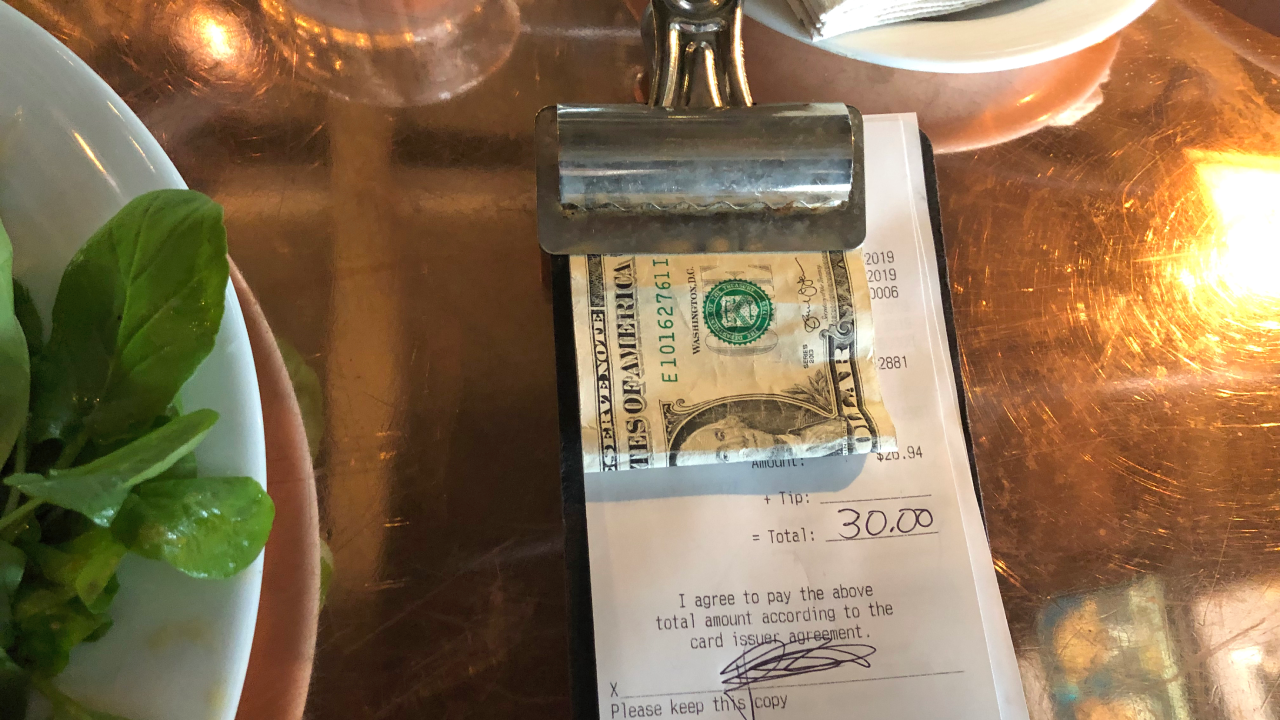
TriggerPhoto/ Getty Photographs
We’ve discovered one factor presidential candidates Kamala Harris and Donald Trump agree on: suggestions ought to not be topic to federal earnings taxes. However this seemingly worker-friendly change (which might seemingly require congressional approval) may have main unintended penalties.
For starters, the Committee for a Accountable Federal Finances (a nonpartisan nonprofit) studies that Harris’ plan may add anyplace from $100 billion to $200 billion to the federal price range deficit over 10 years. The group scores Trump’s plan even worse, estimating it will add $150 billion to $250 billion to the deficit over the subsequent decade. Taxes and charges are sometimes like Whac-A-Mole: when one goes down, one other pops up.
Individuals are bored with tipping
I worry these plans may make American employees much more reliant on suggestions at a time when many purchasers are fed up with the apply. About 6 in 10 U.S. adults (59 p.c) have no less than one damaging view towards tipping, in keeping with a latest Bankrate survey. That features 37 p.c who imagine companies ought to pay their staff higher fairly than relying a lot on suggestions, 35 p.c who imagine that tipping tradition has gotten uncontrolled and 34 p.c who’re aggravated about pre-entered tip screens (which have turn into frequent at espresso outlets, meals vehicles and elsewhere).
Eliminating taxes on suggestions may make the scenario worse. It’s actually not going to incentivize companies to pay their employees extra money. In actual fact, it’s simple to examine employers classifying extra staff as “tipped employees” beneath the guise of a “no tax on suggestions” coverage. That’s probably a precarious place to be, because the federal tipped minimal wage is a mere $2.13 per hour (unchanged since 1991).
Some municipalities have larger minimal wages for tipped employees, however making a dwelling on suggestions has turn into more and more tenuous. Whereas there was briefly a groundswell of help for service-industry employees in 2020 amidst the COVID-19 pandemic, Individuals have tipped a lot much less often within the years since.
- For instance, 75 p.c of sit-down restaurant diners at all times tipped in 2021. Now it’s 67 p.c.
- 63 p.c at all times tipped their barber/hair stylist in 2021. That has fallen to 55 p.c.
- 59 p.c at all times tipped for meals supply in 2021, in contrast with 51 p.c at the moment.
- 48 p.c at all times tipped their taxi/rideshare drivers in 2021, versus 41 p.c at current.
The generational breakouts are notably stark. Solely 35 p.c of Gen Zers (ages 18-27) who go to sit-down eating places at all times go away a tip. That will increase to a still-low 56 p.c amongst millennial diners (ages 28-43). Tipping is extra customary amongst Gen Xers (78 p.c of those 44-59 year-olds at all times tip at sit-down eating places) and child boomers (ages 60-78; 86 p.c at all times tip once they go to sit-down eating places). With younger adults, specifically, tipping so occasionally, working-class staff could be higher off relying much less on suggestions.
May the wealthy take benefit?
Extremely-paid professionals may search to make the most of tax-free suggestions. May an govt’s multimillion-dollar bonus be categorized as a tip in order to keep away from federal taxes? At scale, that would considerably add to the price range deficit and wouldn’t assist the blue-collar people this concept is meant to help. Vice President Harris has signaled a need for earnings limits on tax-free suggestions; former President Trump’s plan is much less clear.
Plus, many tipped employees aren’t paying taxes anyway
Money suggestions are notoriously underreported, though expanded credit score and debit card utilization is offering the IRS with extra of a paper path. Even then, “37 p.c of tipped employees had incomes low sufficient that they confronted no federal earnings tax in 2022, even earlier than accounting for tax credit,” in keeping with the Yale Finances Lab.
Working and not using a security web
Staff and unbiased contractors who rely closely on suggestions are on the whims of their prospects. If enterprise is gradual or prospects are stingy, their earnings suffers. And all these employees are much less more likely to obtain paid day off, medical health insurance advantages, 401(ok) matches and different perks. Take gig employees, for instance. Whereas it sounds good to be your individual boss and set your individual hours, there’s a fragility related to the dearth of a security web.
The underside line
Eliminating federal taxes on suggestions is a provocative marketing campaign speaking level – it’s not a coincidence that each candidates debuted their concepts in tourism-heavy Nevada – however it lacks substance. To actually enhance employees’ lives, politicians ought to give attention to boosting wages and advantages fairly than doubling down on a tipping-centric tradition that’s already falling out of favor.
Have a query about bank cards? E-mail me at ted.rossman@bankrate.com and I’d be blissful to assist.