This put up was sponsored by Cloudways. The opinions expressed on this article are the sponsor’s personal.
Questioning why your rankings could also be declining?
Simply found your WooCommerce web site has sluggish load instances?
A sluggish WooCommerce web site doesn’t simply price you conversions. It impacts search visibility, backend efficiency, and buyer belief.
Whether or not you’re a developer working your personal stack or an company managing dozens of consumer shops, understanding how WooCommerce efficiency scales underneath load is now thought-about desk stakes.
At the moment, many WordPress websites are way more dynamic, that means many issues are taking place on the similar time:
- Shops run real-time gross sales.
- LMS platforms monitor person progress.
- Membership websites ship extremely personalised content material.
Each motion a person takes, from logging in, updating a cart, or initiating checkout, depends on dwell knowledge from the server. These requests can’t be cached.
Instruments like Varnish or CDNs can assist with public pages such because the homepage or product listings. However as soon as somebody logs in to their account or interacts with their session, caching now not helps. Every request have to be processed in actual time.
This text breaks down why that occurs and what sort of server setup helps shops keep quick, secure, and able to develop.
Why Do WooCommerce Shops Gradual Down?
WooCommerce usually performs effectively on the floor. However as site visitors grows and customers begin interacting with the location, pace points start to indicate. These are the most typical the reason why shops decelerate underneath stress:
1. PHP: It Struggles With Excessive Person Exercise
WooCommerce is determined by PHP to course of dynamic actions reminiscent of cart updates, coupon logic, and checkout steps. Conventional stacks utilizing Apache for PHP dealing with are slower and fewer environment friendly.
Trendy environments use PHP-FPM, which improves execution pace and handles extra customers without delay with out delays.
2. A Full Database: It Turns into A Bottleneck
Order creation, cart exercise, and person actions generate a excessive variety of database writes. Throughout busy instances like flash gross sales, new merchandise arrivals, or course launches, the database struggles to maintain up.
Platforms that help optimized question execution and higher indexing deal with these spikes extra easily.
3. Caching Points: Object Caching Is Lacking Or Poorly Configured
With out correct object caching, WooCommerce queries the database repeatedly for a similar data. That features product knowledge, imagery, cart contents, and person periods.
Options that embrace built-in Redis help assist transfer this knowledge to reminiscence, lowering server load and bettering web site pace.
4. Concurrency Limits Have an effect on Efficiency Throughout Spikes
Most internet hosting stacks immediately, together with Apache-based ones, carry out effectively for a variety of WordPress and WooCommerce websites. They deal with typical site visitors reliably and have powered many profitable shops.
As site visitors will increase and extra customers log in and work together with the location on the similar time, the load on the server begins to develop. Structure begins to play a much bigger function at that time.
Stacks constructed on NGINX with event-driven processing can handle increased concurrency extra effectively, particularly throughout unanticipated site visitors spikes.
Quite than changing what already works, this method extends the efficiency ceiling for shops which can be turning into extra dynamic and want constant responsiveness underneath heavier load.
5. Your WordPress Admin Slows Down Throughout Gross sales Seasons
Throughout busy intervals like seasonal gross sales campaigns or new inventory availability, shops can usually decelerate for the staff managing the location, too. The WordPress dashboard takes longer to load, which suggests publishing merchandise, managing orders, or enhancing pages additionally turns into slower.
This slowdown occurs as a result of each customers and workers are utilizing the location’s assets on the similar time, and the server has to deal with all these requests without delay.
Trendy stacks cut back this friction by balancing frontend and backend assets extra successfully.
How To Architect A Scalable WordPress Setup For Dynamic Workloads?
WooCommerce shops immediately are constructed for greater than secure site visitors. Clients are logging in, updating their carts, taking actions to handle their subscription profile, and because of this, are interacting together with your backend in actual time.
The standard WordPress setup, which is primarily designed for static content material, can not deal with that form of demand.
Right here’s how a typical setup compares to 1 constructed for efficiency and scale:
| Part | Fundamental Setup | Scalable Setup |
| Net Server | Apache | NGINX |
| PHP Handler | mod_php or CGI | PHP-FPM |
| Object Caching | None or database transients | Redis with Object Cache Professional |
| Scheduled Duties | WP-Cron | System cron job |
| Caching | CDN or full-page caching solely | Layered caching, together with object cache |
| .htaccess Dealing with | Constructed-in with Apache | Guide rewrite guidelines in NGINX config |
| Concurrency Dealing with | Restricted | Occasion-based, memory-efficient server |
How To Manually Setup A Efficiency-Prepared & Scalable WooCommerce Stack
Don’t have bandwidth? Attempt the straightforward method.
When you’re organising your personal server or tuning an current one, are crucial elements to get proper:
1) Use NGINX For Static File Efficiency
NGINX is commonly used as a high-performance internet server for dealing with static recordsdata and managing concurrent requests effectively. It’s effectively suited to shops anticipating excessive site visitors or trying to fine-tune their infrastructure for pace.
In contrast to Apache, NGINX doesn’t use .htaccess recordsdata. Rewrite guidelines, reminiscent of permalinks, redirects, and trailing slashes, have to be added manually to the server block. For WordPress, these guidelines are well-documented and solely have to be set as soon as throughout setup.
This method offers extra management on the server degree and will be useful for groups constructing out their very own setting or optimizing for scale.
2) Allow PHP-FPM For Sooner Request Dealing with
PHP-FPM separates PHP processing from the online server. It offers you extra management over reminiscence and CPU utilization. Tune values like pm.max_children and pm.max_requests primarily based in your server measurement to forestall overload throughout excessive exercise.
3) Set up Redis With Object Cache Professional
Redis permits WooCommerce to retailer ceaselessly used knowledge in reminiscence. This contains cart contents, person periods, and product metadata.
Pair this with Object Cache Professional to compress cache objects, cut back database load, and enhance web site responsiveness underneath load.
4) Substitute WP-Cron With A System-Degree Cron Job
By default, WordPress checks for scheduled duties each time somebody visits your web site. That features sending emails, clearing stock, and syncing knowledge. If in case you have regular site visitors, it really works. If not, issues get delayed.
You’ll be able to keep away from that by turning off WP-Cron. Simply add outline(‘DISABLE_WP_CRON’, true); to your wp-config.php file. Then, arrange an actual cron job on the server degree to run wp-cron.php each minute. This retains these duties working on time with out relying on guests.
5) Add Rewrite Guidelines Manually For NGINX
NGINX doesn’t use .htaccess. Meaning you’ll have to outline URL guidelines instantly within the server block.
This contains issues like permalinks, redirects, and static file dealing with. It’s a one-time setup, and many of the guidelines you want are already out there from trusted WordPress documentation. When you add them, all the pieces works identical to it will on Apache.
A Few Tradeoffs To Preserve In Thoughts
This type of setup brings an actual pace enhance. However there are some technical modifications to remember.
- NGINX gained’t learn .htaccess. All rewrites and redirects have to be added manually.
- WordPress Multisite might have further tweaks, particularly if you happen to’re utilizing subdirectory mode.
- Safety settings like IP bans or fee limits needs to be dealt with on the server degree, not by way of plugins.
Most builders gained’t discover these points tough to work with. However if you happen to’re utilizing a contemporary platform, a lot of it’s already taken care of.
You don’t want overly complicated infrastructure to make WooCommerce quick; only a stack that aligns with how trendy, dynamic shops function immediately.
Subsequent, we’ll take a look at how that form of stack performs underneath site visitors, with benchmarks that present what really modifications when the server is constructed for dynamic websites.
What Occurs When You Change To An Optimized Stack?
Not all efficiency challenges come from code or plugins. As shops develop and person interactions enhance, the kind of workload turns into extra essential, particularly when dealing with dwell periods from logged-in customers.
To raised perceive how completely different environments reply to this type of exercise, Koddr.io ran an unbiased benchmark evaluating two frequent manufacturing setups:
- A hybrid stack utilizing Apache and NGINX.
- A stack constructed on NGINX with PHP-FPM, Redis, and object caching.
Each setups had been totally optimized and included tuned elements like PHP-FPM and Redis. The aim of the benchmark was to look at how every performs underneath particular, real-world circumstances.
The checks targeted on uncached exercise from WooCommerce and LearnDash, the place logged-in customers set off dynamic server responses.
In these situations, the optimized stack confirmed increased throughput and consistency throughout peak masses. This highlights the worth of getting infrastructure tailor-made for dynamic, high-concurrency site visitors, relying on the use case.
WooCommerce Runs Sooner Underneath Load
One check simulated 80 customers testing on the similar time. The distinction was clear:
| State of affairs | Hybrid Stack | Optimized Stack | Acquire |
| WooCommerce Checkout | 3,035 actions | 4,809 actions | +58% |
LMS Platforms Profit Even Extra
For LearnDash course shopping—a write-heavy and uncached process, the optimized stack accomplished 85% extra requests:
| State of affairs | Hybrid Stack | Optimized Stack | Acquire |
| LearnDash Course Checklist View | 13,459 actions | 25,031 actions | +85% |
This exhibits how optimized stacks deal with personalised or dynamic content material extra effectively. Some of these requests can’t be cached, so the server’s uncooked effectivity turns into essential.
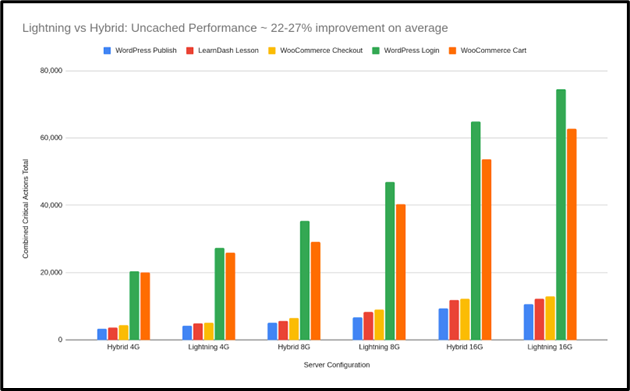 Screenshot from Koddr.io, August 2025
Backend Velocity Improves, Too
The optimized stack wasn’t simply quicker for purchasers. It additionally made the WordPress admin space extra responsive:
- WordPress login instances improved by as much as 31%.
- Publish actions ran 20% quicker, even with excessive site visitors.
This implies your staff can concurrently handle merchandise, replace pages, and reply to gross sales in actual time, with out delays or timeouts.
It Handles Extra With out Relying On Caching
When Koddr turned off Varnish, the hybrid stack skilled a 71% drop in efficiency. This exhibits how successfully it handles cached site visitors. The optimized stack dropped simply 7%, which highlights its means to take care of pace even throughout uncached, logged-in periods.
Each setups have their strengths, however for shops with real-time person exercise, lowering reliance on caching could make a measurable distinction.
| Stack Sort | With Caching | With out Caching | Drop |
| Hybrid Stack | 654,000 actions | 184,000 actions | -7% |
| Optimized Stack | 619,000 actions | 572,000 actions | -7% |
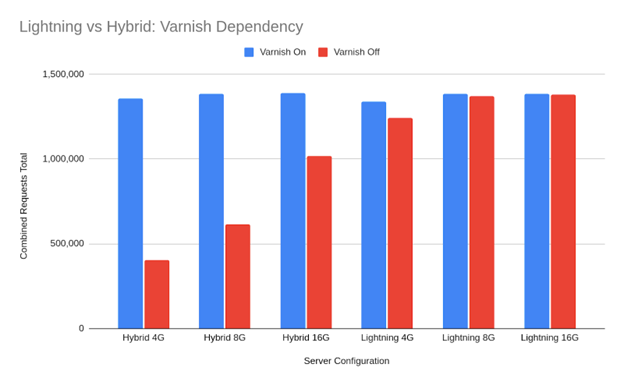 Screenshot from Koddr.io, August 2025
Why This Issues?
Static pages are straightforward to optimize. However WooCommerce shops take care of real-time site visitors. Cart updates, login periods, and checkouts all require dwell processing. Caching can not assist as soon as a person has signed in.
The Koddr.io outcomes present how an optimized server stack:
- Reduces CPU spikes throughout site visitors surges.
- Retains the backend responsive in your staff.
- Delivers extra secure pace for logged-in customers.
- Helps scale with out complicated efficiency workarounds.
These are the sorts of modifications that energy newer stacks purpose-built for dynamic workloads like Cloudways Lightning, constructed for actual WooCommerce workloads.
Core Net Vitals Aren’t Simply About The Frontend
You’ll be able to optimize each picture. Minify each line of code. Change to a quicker theme. However your Core Net Vitals rating will nonetheless endure if the server can’t reply rapidly.
That’s what occurs when logged-in customers work together with WooCommerce or LMS websites.
When a buyer hits “Add to Cart,” caching is out of the image. The server has to course of the request dwell. That’s the place TTFB (Time to First Byte) turns into an actual downside.
Gradual server response means Google waits longer to start out rendering the web page. And that delay instantly impacts your Largest Contentful Paint and Interplay to Subsequent Paint metrics.
Frontend tuning will get you a part of the way in which. But when the backend is sluggish, your scores gained’t enhance. Particularly for logged-in experiences.
Actual optimization begins on the server.
How Companies Are Skipping The Guide Work
Each developer has a guidelines for WooCommerce efficiency. Use NGINX. Arrange Redis. Substitute WP-Cron. Add a WAF. Take a look at underneath load. Preserve tuning.
However not each staff has the bandwidth to take care of all of it.
That’s why extra businesses are utilizing pre-optimized stacks that embrace these upgrades by default. Cloudways Lightning, a managed stack primarily based on NGINX + PHP-FPM, designed for dynamic workloads is an efficient instance of that.
It’s not nearly pace. It’s additionally about backend stability throughout excessive site visitors. Admin logins keep quick. Product updates don’t grasp. Orders preserve flowing.
Joe Lackner, founding father of Celsius LLC, shared what modified for them:
“Transferring our WordPress workloads to the brand new Cloudways stack has been a game-changer. The console admin expertise is snappier, web page load instances have improved by +20%, and as soon as once more Cloudways has confirmed to be method forward of the sport when it comes to reliability and cost-to-performance worth at this worth level.”
That is what businesses are in search of. A method to scale with out getting dragged into infrastructure administration each time site visitors picks up.
Remaining Takeaway
WooCommerce efficiency is now not nearly homepage load pace.
Your web site handles real-time exercise from each clients and your staff. As soon as a person logs in or reaches checkout, caching now not applies. Every motion hits the server instantly.
If the infrastructure isn’t optimized, web site pace drops, gross sales endure, and backend work slows down.
The foundations matter. A stack that’s constructed for top concurrency and uncached site visitors retains issues quick throughout the board. That features cart updates, admin modifications, and product publishing.
For groups who don’t wish to handle server tuning manually, choices like Cloudways Lightning ship a quicker, less complicated path to efficiency at scale.
Use promo code “SUMMER305” and get 30% off for five months + 15 free migrations. Signup Now!
Picture Credit
Featured Picture: Picture by Cloudways. Used with permission.
In-Put up Pictures: Pictures by Cloudways. Used with permission.